Wired for Victory: What European Fencing's Gear Innovations Mean for American Competitors
When American fencing enthusiasts tuned in to the 2018 European Fencing Championship, most were focused on the footwork, the strategy, and the lightning-fast exchanges between the continent's finest blades. Fewer were paying close attention to the equipment itself — and that may be a significant oversight. Behind every touch scored and every bout decided, a quiet revolution in fencing technology was unfolding on the pistes of Novi Sad, Serbia, and its implications extend well beyond European borders.
The Electronics Arms Race
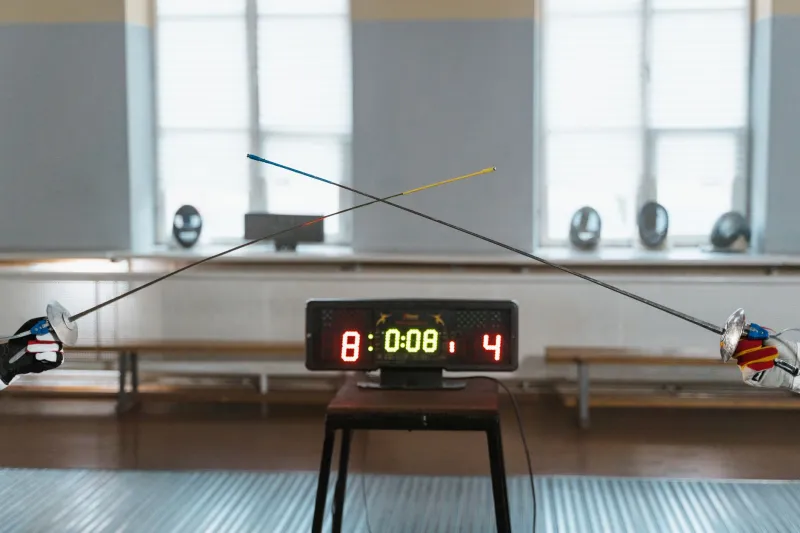
Modern fencing is, at its core, an electrical sport. Every valid touch is registered through a network of conductive wires, body cords, and scoring machines that must process signals in fractions of a second. At the 2018 European Championship, the scoring systems on display represented the current apex of this technology — units capable of distinguishing simultaneous touches within a margin of roughly 25 milliseconds for foil and sabre, and with no lockout period for épée.
Several European manufacturers, including industry stalwarts based in France and Germany, have introduced scoring consoles that feature enhanced signal clarity and reduced ghost-touch interference. Ghost touches — erroneous signals caused by poor contact or equipment wear — have long frustrated competitors at every level. The newer systems employ improved filtering algorithms that significantly reduce false positives, giving athletes and referees greater confidence in every call.
For American clubs and tournament organizers, the practical question is straightforward: are US facilities keeping pace? The honest answer is mixed. Major national events organized by USA Fencing have progressively adopted updated electronics, but the gap between what a fencer encounters at a local club and what they experience at a championship-level European venue remains considerable. Coaches working with serious competitors increasingly recommend that their athletes train on the best available equipment so that the feel of a high-stakes bout is never unfamiliar.
Protective Gear: Strength Without Sacrifice
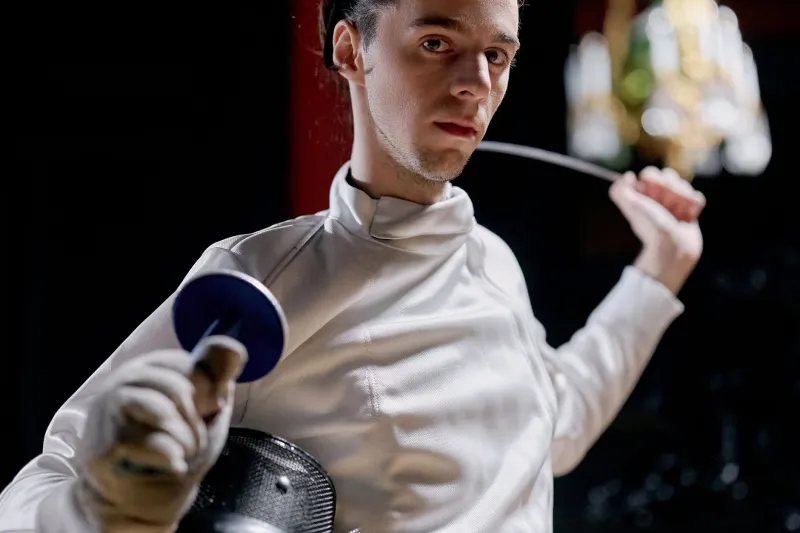
Beyond electronics, the protective equipment worn by competitors at the 2018 European Championship reflected advances in materials science that would not have seemed out of place in an aerospace engineering catalog. The traditional 350-newton and 800-newton puncture-resistant fabrics — the numerical ratings refer to the force required to penetrate the material — have been supplemented by a new generation of ultra-high-molecular-weight polyethylene (UHMWPE) blends.
These materials are lighter than their predecessors while meeting or exceeding the same safety thresholds. For a sport in which explosive movement and endurance are critical, even marginal reductions in suit weight can translate into measurable performance benefits over the course of a long competition day. European fencers at the elite level have had access to these suits through national federation partnerships with manufacturers for several years; many American competitors are only now encountering them through individual purchases or club upgrades.
Mask technology has similarly advanced. Several athletes at Novi Sad competed in masks featuring improved mesh geometry — a tighter, more uniform weave that reduces the risk of blade penetration while maintaining adequate visibility. Enhanced padding at the bib and back-of-head positions addresses the most common sites of impact-related discomfort during extended training blocks.
The Blade and the Body Cord
It may seem counterintuitive that something as seemingly simple as a blade or a body cord could represent a meaningful technological frontier, but European manufacturers have invested considerable research into both. Blades forged from maraging steel — a high-strength alloy favored for its resilience and consistent flex characteristics — have become the standard at the European Championship level. These blades maintain their geometry under repeated stress more reliably than lower-grade alternatives, providing a more predictable response during the rapid attacks and parries that define championship fencing.
Body cords, the wired connections between a fencer's weapon and the scoring system, have also seen refinement. Improved connector housing materials and more durable internal wiring reduce the frequency of mid-bout malfunctions — a frustration that can disrupt rhythm and concentration at the worst possible moment. American competitors who have trained extensively in Europe frequently cite equipment reliability as one of the most underappreciated advantages that top European fencers enjoy on home turf.
Adapting European Standards Stateside
The good news for American fencers is that the equipment innovations showcased at the 2018 European Championship are not proprietary secrets. European manufacturers actively export to the United States, and several domestic retailers maintain strong inventories of competition-grade gear. The challenge is less about access and more about awareness and investment.
Coaches at the collegiate and junior elite levels are beginning to formalize equipment audits — systematic reviews of the gear their athletes use in training and competition — to identify and address deficiencies. Some high-performance programs have established partnerships with equipment suppliers that mirror the federation arrangements common in Europe, providing athletes with access to current-generation gear at reduced cost in exchange for feedback and visibility.
For the individual American fencer looking to make targeted improvements, the priority list emerging from a close study of the 2018 European Championship is clear: invest in a current-generation scoring-compatible body cord, ensure that protective garments meet 800-newton standards for the relevant weapon, and where budget permits, upgrade to a maraging steel blade appropriate to your competitive discipline.
A Competitive Calculus
Equipment alone does not make a champion. The athletes who dominated at Novi Sad did so on the strength of years of disciplined technical and tactical development. But equipment functions as a multiplier — it amplifies the capabilities of the fencer using it, and it sets the conditions under which training translates into competition performance.
For American fencers with aspirations to compete at the European level, or simply to raise their game on the domestic circuit, engaging seriously with the equipment innovations on display at the 2018 European Championship is not an optional consideration. It is part of the competitive calculus that separates those who study the sport in its entirety from those who focus only on what happens between the first whistle and the last.