The Invisible Edge: Inside the Psychological Mastery of Europe's Elite Fencers
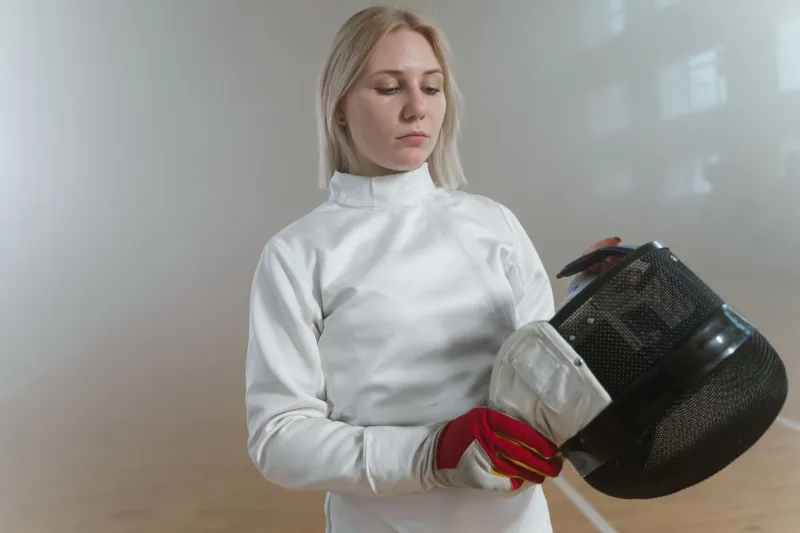
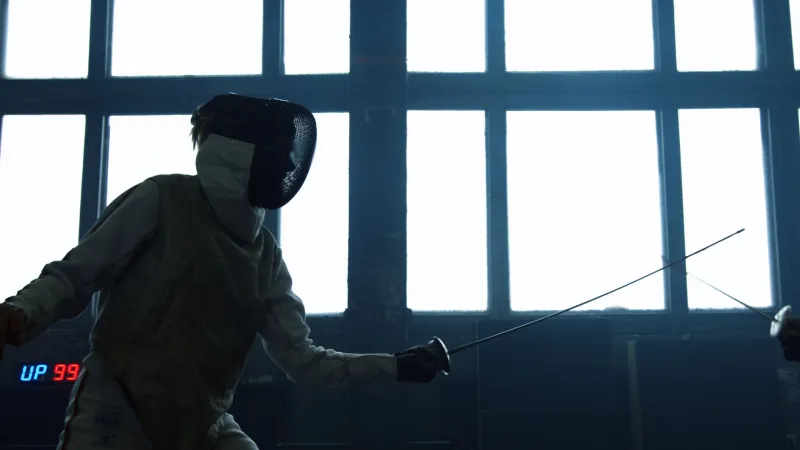
Watch the footage from the 2018 European Fencing Championship closely enough, and a pattern emerges that has nothing to do with footwork or blade work. It is visible in the moments between touches — in the deliberate breath taken after conceding a point, in the composed mask removal during a break in play, in the unhurried posture of a fencer who is trailing on the scoreboard but has not, in any meaningful sense, lost the bout. What you are observing is mental architecture, and it is among the most consequential competitive advantages that European elite fencers possess.
A Culture Built on the Mind
European fencing's psychological sophistication did not emerge overnight. Across Hungary, Italy, France, and Russia — nations that have historically produced a disproportionate share of world-class fencers — the integration of sports psychology into elite training programs predates its widespread adoption in American athletics by decades. The Soviet-era emphasis on comprehensive athlete development, which permeated Eastern European sports science well into the post-Cold War period, placed mental conditioning on equal footing with physical preparation. That legacy is very much alive in the approaches visible at Novi Sad.
Sport psychologists embedded within national federation programs work alongside technical coaches as a matter of routine. Their role is not remedial — it is not reserved for athletes who are struggling. Rather, psychological support is treated as a standard component of performance optimization, as unremarkable as a strength and conditioning session. This cultural normalization is itself a competitive advantage, because it removes the stigma that still, in some corners of American sport culture, attaches to the acknowledgment of mental training needs.
Visualization: The Bout Before the Bout
Of the specific techniques employed by European championship-level fencers, structured visualization is perhaps the most widely documented and the most consistently applied. The practice involves mentally rehearsing competitive scenarios in precise, sensory detail — not merely imagining success, but constructing a full internal simulation of the bout environment, including the sounds of the venue, the weight of the weapon, and the physical sensations of movement.
Critically, the visualization exercises used by elite European fencers are not exclusively optimistic. Adversity rehearsal — deliberately imagining scenarios in which things go wrong, and mentally practicing the response — is a cornerstone of the approach. A fencer who has internally rehearsed the experience of falling behind by three touches in the final period, and who has practiced the emotional and tactical adjustments required to respond, is meaningfully better prepared for that situation than one who has only visualized winning cleanly.
American fencers who have trained at European high-performance centers frequently describe their initial encounter with formalized visualization protocols as revelatory. The structured nature of the practice — typically conducted in a quiet environment, guided by a coach or psychologist, and logged as part of the training record — differs substantially from the informal mental rehearsal that many US athletes engage in independently.
Pressure Management: Performing When It Counts
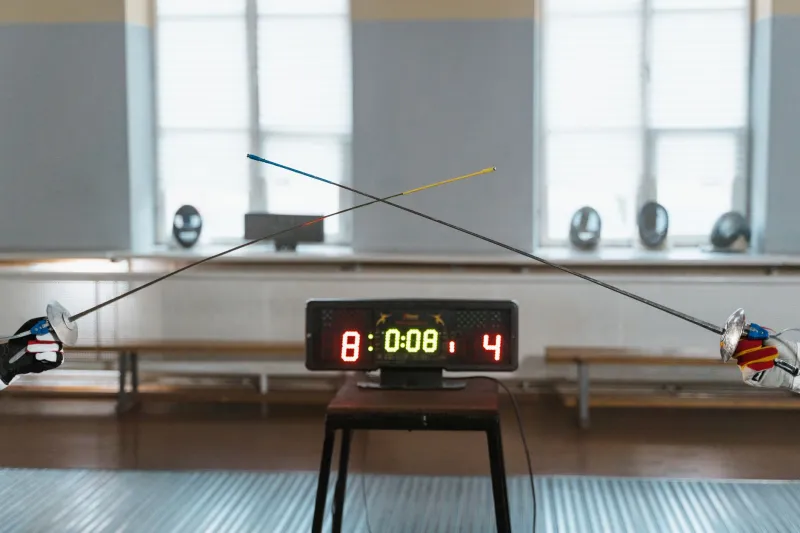
The 2018 European Championship, like all major fencing competitions, is an environment of compressed time and concentrated consequence. A single bout may last only a few minutes. A single touch can determine whether an athlete advances or is eliminated. The ability to perform under these conditions without the degradation of technical skill that anxiety produces is what separates the athletes who peak at championships from those who perform better in training than in competition.
European elite programs address this challenge through a technique sometimes described as pressure inoculation — the deliberate and progressive exposure of athletes to high-stakes training conditions designed to replicate championship stress. This may involve training bouts scored by unfamiliar referees, sessions conducted in front of audiences, or competitions staged within the training environment with consequential outcomes attached to the results.
The physiological component of pressure management is also addressed directly. Breathing regulation techniques — specifically, the practice of extending the exhalation phase of the breath cycle to engage the parasympathetic nervous system — are taught as concrete, applicable tools. The visible composure of elite European fencers in high-pressure moments is, in many cases, the product of years of practiced physiological self-regulation, not a naturally occurring temperamental trait.
Identity and Process Orientation
One of the more nuanced psychological characteristics observable in European championship-level fencers is their relationship to outcome versus process. Coaches and sports psychologists working within elite European programs consistently emphasize a process-oriented competitive identity — one in which the fencer's sense of self and competitive confidence is anchored to the quality of their execution rather than to the scoreboard.
This orientation has practical consequences during a bout. A fencer whose confidence is contingent on the score is vulnerable to rapid psychological deterioration when the score is unfavorable. A fencer whose confidence is grounded in the quality of their tactical decision-making and technical execution can maintain composure and continue performing effectively regardless of the scoreboard, because their internal metric of success remains accessible even in difficult moments.
For American fencers raised in a sports culture that places enormous emphasis on winning as the primary measure of competitive value, cultivating a genuine process orientation requires deliberate and sustained effort. It is not achieved through a single conversation with a coach, but through a sustained restructuring of the internal narrative that accompanies competitive experience.
What American Fencers Can Take Away
The psychological practices of European elite fencers are not mystical, and they are not inaccessible. They are, at their foundation, systematic applications of well-established principles from sports science and performance psychology. What European programs have that many American programs lack is the institutional commitment to delivering these practices consistently and treating them as non-negotiable components of elite development.
For the American fencer seeking to close the mental gap with European counterparts, the starting points are concrete: engage with a qualified sports psychologist, establish a formalized visualization practice, and work with coaches to introduce pressure inoculation into regular training. None of these steps require a national federation budget. What they require is the recognition — increasingly supported by everything observed at the 2018 European Fencing Championship — that the contest between elite fencers is decided as much above the shoulders as below them.