Against All Odds: The Remarkable Journeys of the 2018 European Championship's Most Unexpected Competitors
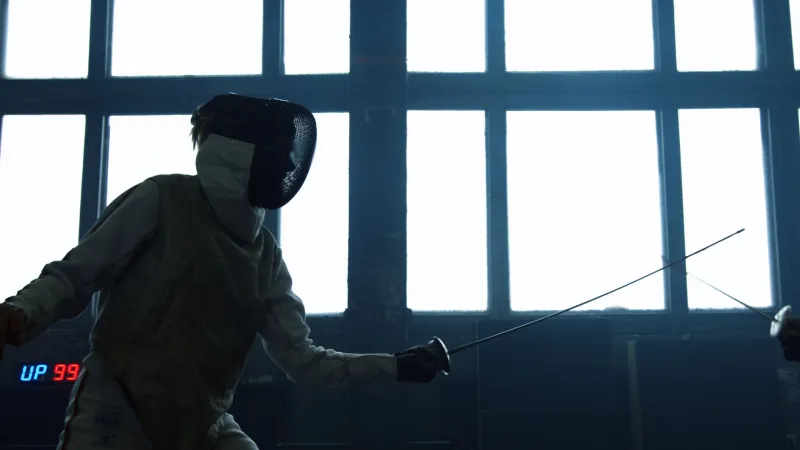
The 2018 European Fencing Championship is, in many respects, a gathering of the continent's most accomplished and thoroughly prepared athletes. National programs invest heavily in their top competitors, and the names that appear consistently at the top of the rankings typically represent years of institutional support and structured development. But tucked within the draw are athletes whose paths to this stage are anything but conventional — competitors whose stories challenge assumptions about who fencing is for and where champions can come from.
For American fans who associate the sport primarily with elite prep schools and well-resourced club programs, these profiles offer a different kind of inspiration.
The Fisherman's Son From a Croatian Coastal Village
Marko Vukić did not grow up near a fencing club. He grew up near the Adriatic. Raised in a small coastal settlement in Croatia where his family operated fishing boats for three generations, Vukić encountered fencing almost by accident at the age of fourteen, when a regional sports outreach program organized a demonstration at his school.
Within a year, he was traveling several hours each way to train at the nearest club with any serious coaching infrastructure. His family's resources were modest, and for a period of roughly two years, his training was supported in part by a small community fundraising effort organized by his school. By the time he reached the Croatian national youth program, coaches noted that his footwork — developed partly through years of balancing on the decks of fishing vessels — was unusually fluid and adaptive.
Vukić's qualification for the 2018 European Championship represents a remarkable trajectory, and within Croatian fencing circles, his story has become something of a rallying point for efforts to expand access to the sport beyond urban centers.
The Former Ballet Student From Rural Romania
For Ioana Florescu, the path to competitive fencing ran directly through a dance studio in a small Romanian town where her parents enrolled her at age six. Ballet remained her primary focus through early adolescence, but a knee injury at fifteen forced a prolonged break from dance — and it was during that recovery period that a physiotherapist suggested fencing as a low-impact activity to rebuild strength and coordination.
The suggestion turned out to be consequential. Florescu's background in ballet had given her an exceptional sense of spatial awareness and body control, qualities that her first fencing coach described as immediately apparent. "She understood her own body in a way that most beginners simply do not," the coach noted in a profile published by the Romanian Fencing Federation. "The transition was not easy, but the foundation was extraordinary."
Now competing at the senior level and representing Romania at the 2018 European Championship, Florescu has become a notable example of how unconventional athletic backgrounds can translate into fencing excellence. For American readers familiar with the crossover between dance and sport, her story will resonate — it echoes the kind of cross-disciplinary athleticism that US coaches increasingly recognize as an asset.
The Self-Taught Fencer From Northern Finland
There are perhaps no more unlikely origins for a championship-level fencer than a remote town above the Arctic Circle with no fencing club, no local competition circuit, and winters that last the better part of nine months. Yet that is precisely where Aleksi Mäkinen began his fencing education — largely through online instructional videos, books sourced from a regional library system, and eventually correspondence with a coach in Helsinki who agreed to provide remote guidance.
Mäkinen's self-directed early development is unusual by any standard, and when he finally traveled south to train in person at age sixteen, coaches were reportedly struck by both the gaps in his technical foundation and the ingenuity with which he had compensated for them. He had, in the absence of conventional instruction, developed a highly idiosyncratic style that required significant refinement — but also contained elements that proved genuinely difficult for opponents to read.
His qualification for the 2018 European Championship through the Finnish national program has drawn attention from coaches and commentators who see in his development a case study in the possibilities and limitations of self-directed athletic learning.
The Late Starter From a Portuguese Industrial City
Most elite fencers begin training in childhood. Miguel Ferreira did not pick up a blade until he was nineteen years old, following a youth spent primarily focused on football — soccer, in American parlance — in a working-class neighborhood outside of Porto. A friend's invitation to a fencing club open day was, by his own account, more curiosity than ambition.
What followed was an almost implausibly rapid development arc. Within three years, Ferreira had reached the national senior circuit. Within five, he had earned a place in the Portuguese national program. His late start has informed his competitive style in observable ways — he brings an improvisational quality to his bouts that coaches attribute to the fact that he never fully internalized the rigid technical frameworks that early-training athletes sometimes struggle to move beyond.
At twenty-six, Ferreira is competing at the 2018 European Championship with a record that would be impressive for any athlete, but which is rendered extraordinary by the compressed timeline over which it was built.
Why These Stories Matter to American Fans
For American audiences, the appeal of these profiles extends beyond simple admiration. Fencing in the United States has long carried a reputation — not entirely undeserved — as a sport of relative privilege, concentrated in coastal cities and well-funded academic environments. The athletes profiled here offer a counternarrative that resonates across any cultural context: that exceptional competitors can emerge from unexpected places when determination and opportunity intersect, however imperfectly.
The 2018 European Fencing Championship is, among many other things, a reminder that the sport's reach is broader and its stories more varied than any single narrative can contain. The athletes who arrived here via fishing villages, dance studios, Arctic winters, and industrial suburbs are proof of that — and their presence on the championship piste is worth celebrating on its own terms.