Foil, Épée, or Sabre: A Tactical Breakdown of the Three Weapons Defining the 2018 European Championships
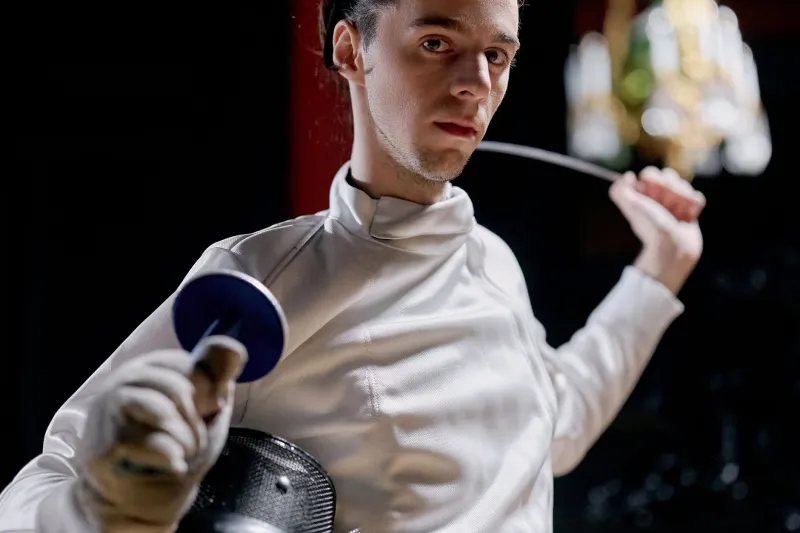
Ask a casual American sports fan to describe fencing, and they will likely sketch a vague image involving white uniforms, wire masks, and two people lunging at each other with thin metal sticks. What that description misses entirely is the fact that "fencing" is not a single sport — it is three distinct disciplines, each with its own scoring rules, target zones, equipment specifications, and strategic philosophies so different from one another that top specialists in one weapon often struggle to compete meaningfully in another.
At the 2018 European Fencing Championship, those three disciplines — foil, épée, and sabre — will each produce their own champions, their own dramatic moments, and their own arguments about which nation currently owns the soul of the sport. For American fans looking to make sense of what they're watching, understanding the tactical DNA of each weapon is the essential first step.
Foil: The Purist's Game and France's Enduring Kingdom
Of the three weapons, foil is most closely aligned with the classical image of fencing as a thinking person's martial art. Points are scored only by striking the opponent's torso with the tip of the blade, and the sport's "right of way" convention means that scoring priority — not merely contact — determines who earns the touch. When both fencers hit simultaneously, the athlete who initiated the attack correctly wins the point.
This ruleset rewards patience, precision, and the ability to construct attacks through sequences of feints and blade manipulations that create legitimate right of way before the final thrust lands. It is, in the parlance of coaches, a weapon that punishes impatience.
France has been the dominant force in foil for much of the modern era, producing technically refined fencers whose footwork and blade economy are widely regarded as the benchmark for the discipline. Heading into the 2018 European Championship, the French squad enters with the deepest bench in the event and a coaching culture that treats foil as something close to a national inheritance.
Italian fencers represent the most formidable challengers, with a tradition of explosive attacking fencing that contrasts stylistically with French conservatism. The tension between these two philosophies — French control versus Italian aggression — has historically generated the championship's most compelling foil bouts.
For American fans, foil is perhaps the easiest entry point into understanding high-level fencing strategy. The right-of-way rule forces competitors to telegraph their intentions in ways that a patient observer can learn to read, making the tactical interplay more visible than in the other two weapons.
Épée: The Purest Test of Timing and the Rise of Eastern Europe
If foil is a chess game, épée is a poker match. The entire body is a valid target, there is no right-of-way convention, and simultaneous touches score a point for both fencers. That last rule transforms the strategic calculus entirely: a competitor who is willing to absorb a hit while landing one of their own can exploit it deliberately. Patience becomes not merely a virtue but a weapon in its own right.
This environment rewards fencers with exceptional distance management, lightning-fast hand speed, and the psychological composure to wait — sometimes for extended periods — for a single high-percentage opportunity rather than forcing exchanges that carry mutual risk.
Eastern European nations, particularly Hungary, Romania, and Switzerland, have developed strong épée traditions built on precisely these qualities. Their fencers tend to be methodical, physically imposing, and extraordinarily difficult to lure into unfavorable exchanges.
The 2018 European Championship épée field is notable for its competitive parity. Unlike foil, where French dominance creates a clear hierarchy, épée presents a more open landscape with legitimate medal contenders from six or seven nations. This makes it arguably the most unpredictable weapon at this year's event — and, for fans who appreciate tactical depth, the most rewarding to follow.
American fencers have historically found their greatest international traction in épée, where the absence of right-of-way rules creates slightly more room for athleticism and unconventional tactical approaches to compensate for experience gaps. Several U.S. competitors with strong World Cup results have built their games around exactly this dynamic.
Sabre: Speed, Aggression, and the Korean-Hungarian Axis
Sabre is fencing at its most kinetic. The target zone extends above the waist, and touches can be scored with either the tip or the cutting edge of the blade — a rule that opens up a dramatically wider vocabulary of attacking actions than foil or épée allow. Right-of-way rules apply, as in foil, but the speed at which sabre exchanges occur compresses decision-making timescales to fractions of a second.
The result is a weapon defined by explosive athleticism, aggressive forward pressure, and the ability to execute complex tactical sequences at speeds that challenge the human eye to follow in real time. Sabre bouts are often decided in single-digit second exchanges that reward preparation, pattern recognition, and nerve over deliberate construction.
The 2018 European Championship sabre competition will be shaped by a fascinating geopolitical dynamic: the ongoing contest between the Hungarian tradition — which prizes technical precision within explosive exchanges — and the influence of Korean-trained fencing philosophy, which has permeated European programs through coaches and training partnerships over the past two decades. Several European national teams have incorporated Korean training methodologies, creating hybrid tactical approaches that are still being stress-tested at the highest levels.
For American fans accustomed to high-intensity sports, sabre is often the weapon that generates the most immediate excitement. Its pace, its physicality, and the visible drama of aggressive exchanges make it the most accessible spectator discipline — even for viewers encountering elite fencing for the first time.
Predictions and the American Lens
Looking ahead to the 2018 European Championship, the weapon most likely to produce a genuine upset narrative is épée, where the competitive balance and the presence of motivated non-European competitors create conditions for an unexpected podium finish. Foil will almost certainly see France and Italy trade podium places, with the individual events potentially producing a breakout performance from a younger French or Italian fencer positioned to lead their national program into the next Olympic cycle. Sabre promises the tournament's most athletically spectacular moments, with Hungary and several Eastern European programs entering in strong form.
For American fans watching from across the Atlantic, the value of understanding these distinctions extends beyond the 2018 championship itself. Fencing is a sport whose Olympic profile continues to grow in the United States, and the European Championship serves as the most rigorous regular-season test of the athletes and programs that will define the sport's next chapter. Learning to read the tactical differences between weapons is learning to speak the language of the sport's highest level — and it is a language well worth acquiring.