Faster, Sharper, Stronger: The Athletic Gap Between European and American Fencing That the 2018 Championship Has Laid Bare
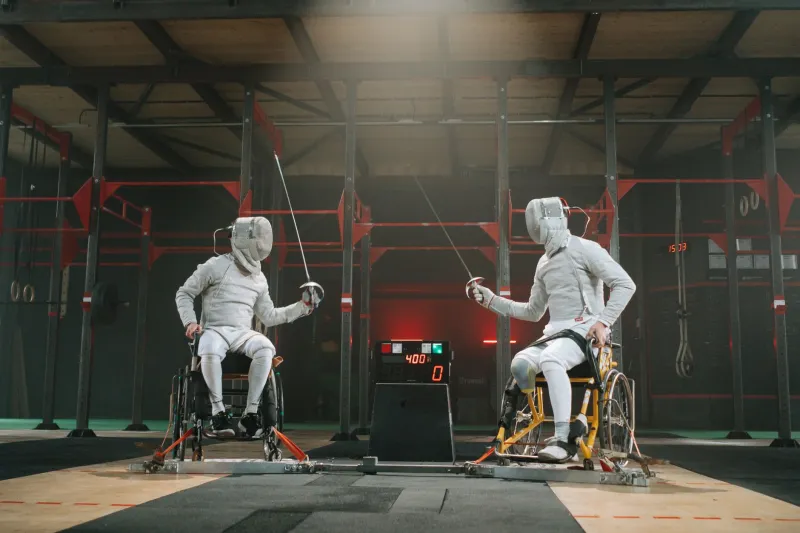
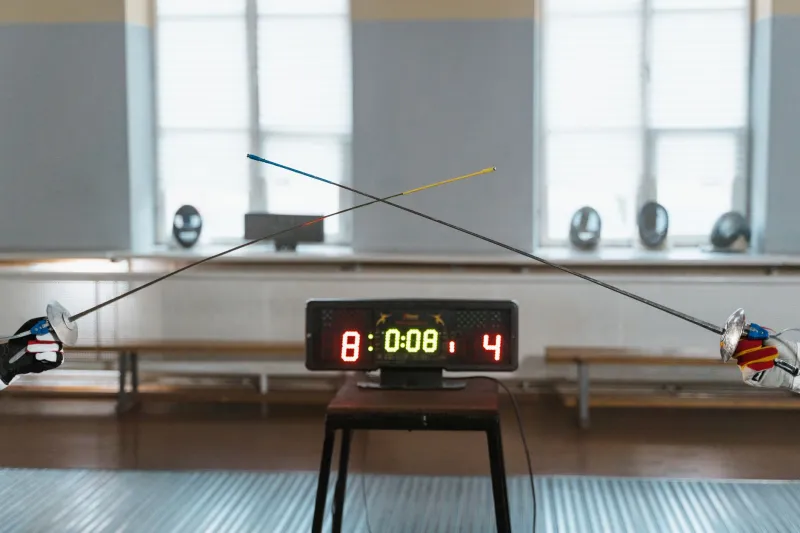
Photo: fencing athlete training speed agility footwork competition, via fortressbp.com
Fencing has never been a slow sport. But watching the 2018 European Fencing Championship unfold in Novi Sad, Serbia, it becomes difficult to escape the conclusion that the sport's top European practitioners are operating at a pace and physical standard that strains traditional American conceptions of what elite fencing looks like.
The evidence is not merely impressionistic. Across all three weapons — foil, épée, and sabre — measurable differences in movement speed, reaction latency, and physical conditioning are visible to any sufficiently attentive observer. Understanding the origins and implications of those differences is essential for American coaches and athletes who aspire to compete consistently at this level.
Quantifying the Gap: What the Numbers Suggest
Precise biomechanical data from championship competitions is difficult to obtain in real time, but the observable metrics available from the 2018 European Championship are instructive. Timing analyses of sabre bouts, for instance, suggest that elite European competitors are initiating offensive actions in the range of 150 to 200 milliseconds from the en garde position — figures that place significant demands on an opponent's reactive capacity.
In foil and épée, the picture is equally demanding. European athletes at this championship are demonstrating what analysts describe as "compressed decision windows" — the interval between perceiving an opponent's intention and executing a defensive or offensive response. The compression of that window, through years of high-frequency, high-intensity training, is one of the most significant performance differentiators on display in Novi Sad.
By comparison, American fencers competing at domestic national events are often operating in environments where those decision windows are somewhat wider, partly because the competitive pool is smaller and partly because training volumes — measured in hours per week on the piste — tend to be lower than those of European state-funded programs.
The Training Volume Divide
The most structurally significant difference between European and American fencing development is not technique — it is volume. Elite European fencers in countries such as France, Hungary, Italy, and Russia train under systems that prioritize full-time athletic development from the mid-teenage years onward. State support, club subsidies, and national federation funding allow athletes to accumulate training hours that their American counterparts, typically managing academic and competitive obligations simultaneously, cannot easily match.
A senior French foilist competing at the 2018 championship, for example, may have logged upward of 1,500 hours of structured piste training in the preceding twelve months. An American peer of equivalent age and ranking, balancing a college schedule, may have accumulated fewer than half that figure.
The implications are not merely quantitative. Higher training volumes produce neurological adaptations — specifically, the reinforcement of motor patterns through repetition — that manifest as the kind of fluid, almost anticipatory movement visible among the top seeds at this year's championship. American athletes, however technically proficient, are often working with motor programs that are less deeply ingrained simply because they have had fewer opportunities to engrave them.
Conditioning Standards: Where the Physical Disparity Is Most Visible
Beyond raw speed, the physical conditioning standards on display at the 2018 European Championship reflect a training philosophy that treats fencing as a high-output athletic endeavor rather than a primarily technical discipline. European programs — particularly those in Eastern Europe — have incorporated systematic strength and conditioning protocols into their fencing curricula for decades.
Leg strength, in particular, is a pronounced differentiator. The explosive lunge mechanics of Hungarian and Romanian sabre fencers at this year's championship reflect not only technical refinement but substantial lower-body power development achieved through dedicated resistance training. French and Italian foilists, meanwhile, demonstrate the kind of sustained lateral agility across multiple bouts that points to structured aerobic conditioning work alongside technical training.
American fencing programs have historically been slower to integrate comprehensive strength and conditioning frameworks into their training models. The sport's technical complexity has, at times, drawn coaching attention away from the physical preparation that underpins technical execution under competitive fatigue.
Biomechanical Advantages: The Role of Movement Efficiency
One of the more analytically rich observations from the 2018 championship concerns movement efficiency — specifically, the degree to which European athletes minimize wasted motion in both offensive and defensive actions. Biomechanical efficiency reduces energy expenditure per action, which compounds over the course of a bout and, crucially, across multiple bouts in a single competition day.
European coaching traditions, particularly in France and Italy, have long emphasized economy of motion as a foundational principle. Actions are refined not only for effectiveness but for energetic sustainability. The result, visible in the championship's later rounds, is that top European seeds tend to look physically fresher in elimination bouts than their opponents — including several American competitors who entered those rounds carrying visible fatigue.
This efficiency advantage is not innate. It is the product of coaching systems that evaluate movement quality with granular attention and correct inefficiencies early in an athlete's development. American programs that aspire to close the performance gap would benefit from adopting similarly rigorous movement quality standards at the junior and cadet levels.
Concrete Takeaways for American Coaches and Athletes
The performance picture emerging from Novi Sad is not cause for discouragement — it is cause for informed, structured response. Several actionable directions suggest themselves from the evidence on display at the 2018 European Championship.
First, American programs should examine their training volume models critically. While full academic schedules are a reality for most US fencers, identifying additional piste time — even in modest increments — can meaningfully accelerate neurological adaptation over a multi-year development cycle.
Second, strength and conditioning integration deserves priority attention. Lower-body power development, lateral agility training, and aerobic base-building should be treated as non-negotiable components of elite fencer preparation, not optional supplements to technical work.
Third, movement efficiency review — ideally through video analysis of training and competition footage — should become standard practice in American club and collegiate programs. Identifying and correcting biomechanical inefficiencies early is among the highest-return investments a coaching program can make.
The Gap Is Real — and Closeable
The 2018 European Fencing Championship has made visible a performance differential that American fencing's most perceptive observers have long recognized. The gap is real, it is measurable, and it is rooted in structural and methodological differences that cannot be wished away.
But it is also closeable. The athletes and coaches who leave Novi Sad with clear eyes and a concrete development plan are the ones most likely to return to future European championships as genuine contenders rather than admiring participants. The 2018 championship, viewed in that light, is not a verdict — it is a baseline.