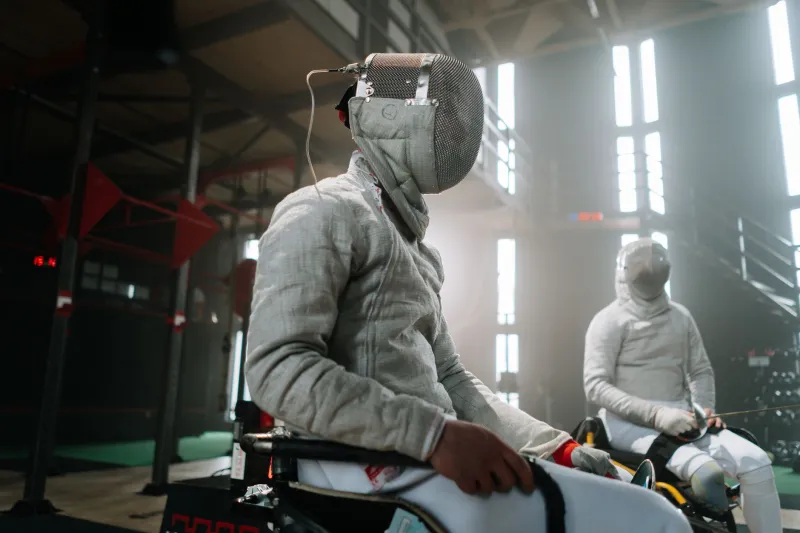
From Niche to Necessary: How 2018 European Championship Venues Are Engineering the Perfect Fencing Spectacle
For decades, American sports fans have encountered fencing the same way most people encounter abstract art — briefly, at a distance, and without much context. A glimpse on a cable sports channel during an Olympic year, perhaps a passing mention in a college athletics brochure. The sport's complexity, its lightning-fast exchanges, and the sheer difficulty of following action on a long, narrow strip have historically made it a tough sell to audiences accustomed to the sprawling visibility of basketball arenas or the thunderous atmospherics of NFL stadiums.
The 2018 European Fencing Championship, however, has offered a compelling counter-argument. Across its competition venues, organizers have assembled an experience that transforms fencing from an inscrutable niche pursuit into a genuinely riveting live spectacle. The methods they have employed — some architectural, some technological, some rooted in simple but brilliant experiential design — deserve serious attention from anyone invested in growing the sport in the United States.
Sightlines as a Strategic Priority
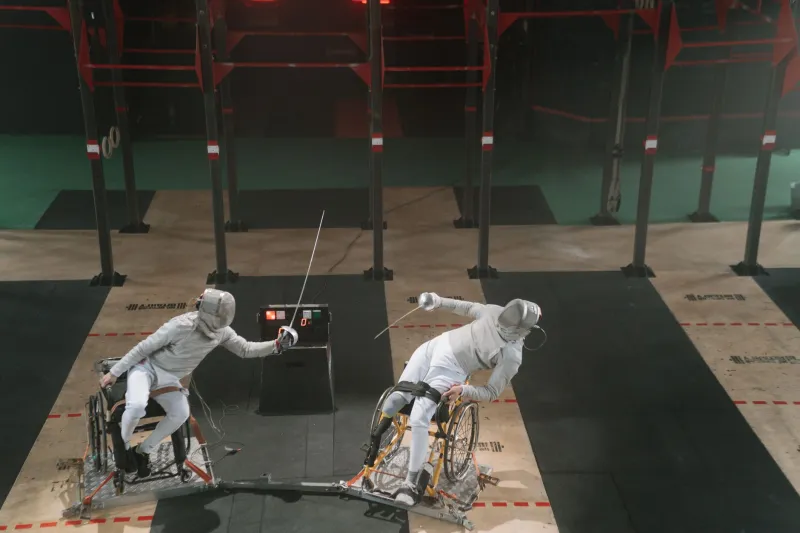
One of the most persistent barriers to fencing as a spectator sport is the geometry of the piste itself. At roughly 46 feet long and just under five feet wide, the strip presents an inherently awkward viewing challenge. Audiences seated to the side of the action see the full length of the bout but struggle to read the fine details of blade work. Those seated at the ends gain intimacy with the footwork and distance management but lose the lateral sweep of the action.
European Championship venues in 2018 addressed this directly through tiered, amphitheater-style seating configurations that angle downward toward the piste rather than running parallel to it. Rather than placing the strip flat on a convention center floor with rows of chairs arranged along the long edges — a common arrangement at American domestic competitions — the primary competition halls were designed so that the majority of seats occupy an elevated vantage point roughly 30 to 45 degrees above the action. This single adjustment dramatically expands what a casual observer can perceive: the distance between fencers, the explosive advance-lunge sequences, and the moment of touch all become readable in a way they simply are not from a flat, side-on perspective.
For American promoters accustomed to working within multi-purpose convention halls or college gymnasiums, this represents a meaningful design challenge. But it is not an insurmountable one. Portable tiered seating systems, already standard equipment at indoor track meets and gymnastics competitions across the United States, could replicate the effect at a fraction of the cost of purpose-built infrastructure.
Real-Time Scoring and the Demystification of the Touch
Perhaps the single greatest obstacle to fencing's mainstream appeal is the opacity of the scoring system. When two fencers exchange a flurry of actions in under a second, the uninitiated spectator has no reliable way of knowing what just happened, who scored, or why the referee raised a particular hand. The result is an experience that can feel alienating even for attentive observers.
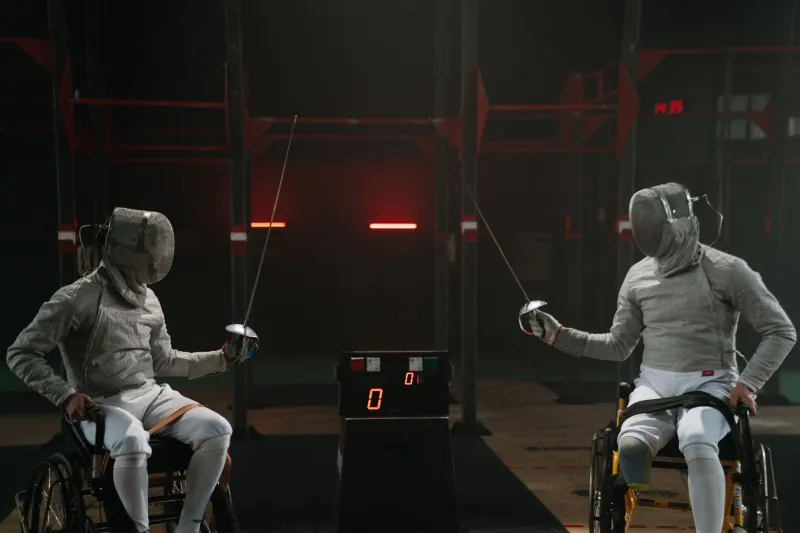
The 2018 European Championship venues have invested heavily in real-time display infrastructure designed specifically to close this interpretive gap. Large-format LED scoreboards — positioned at both ends of each primary piste and supplemented by secondary displays mounted at mid-hall — show not just the running score but annotated touch breakdowns that identify the type of action credited: a simple attack, a parry-riposte, a counterattack with right-of-way. In the sabre and foil events, where priority rules govern simultaneous actions, brief graphical overlays appear within seconds of each touch, illustrating the sequence of movements the referee adjudicated.
This kind of real-time editorial commentary, built directly into the venue's display architecture, functions almost like a live color analyst for audiences who lack deep technical knowledge. American fans familiar with the pitch-by-pitch graphics packages that MLB broadcasts layer over live game footage will recognize the instinct immediately: give the audience the information they need to feel informed, and they will invest emotionally in the outcome.
Sound Design and Atmosphere Engineering
American sports culture is deeply attuned to the role of sound in generating excitement. From the organ at Wrigley Field to the curated playlist that fills an NBA arena between whistles, ambient sound is understood as a lever for emotional engagement. European Championship venues in 2018 have applied this same logic to fencing with notable sophistication.
Rather than allowing the characteristic electronic buzz of the scoring apparatus to serve as the primary auditory signature of the sport — which, to uninitiated ears, can sound clinical and antiseptic — venue sound designers have layered in crowd microphone amplification, directional speaker arrays that project the physical sounds of footwork and blade contact, and carefully timed musical cues that punctuate the breaks between bouts. The effect is a soundscape that feels athletic rather than academic, communicating urgency and physicality even to observers who cannot fully parse the technical action unfolding before them.
This is a relatively low-cost intervention. American competition organizers working with venues that already possess installed sound systems could replicate the approach with modest investment in audio programming and a willingness to treat the sonic environment as an intentional design element rather than an afterthought.
Fan Education Infrastructure Built Into the Venue Itself
Beyond the displays and the acoustics, the 2018 European Championship venues have embedded fan education directly into the physical space of the event. Concourse areas feature large-format graphic panels explaining the rules of each weapon discipline, illustrated with action photography and simplified rule summaries. Interactive kiosks allow visitors to test their own reaction times against recorded touch sequences from elite bouts, creating a visceral appreciation for the sport's physical demands. Staff stationed near the main pistes during competition warmups are equipped to answer questions from spectators new to the sport.
This infrastructure treats the casual attendee not as a problem to be managed but as a potential convert to be cultivated. It is an approach that American collegiate and club programs, which often struggle to attract and retain spectators beyond the families of competing athletes, could adopt at virtually any scale.
The Larger Lesson for American Fencing
What the 2018 European Championship venues collectively demonstrate is that fencing's challenge as a spectator sport is not inherent to the sport itself — it is a presentation problem. The speed, the precision, the tactical depth, and the one-on-one drama of the bout are all genuinely compelling raw materials. What has historically been missing, particularly in the American context, is the surrounding architecture of information, atmosphere, and accessibility that transforms raw athletic action into a coherent and emotionally engaging experience for a general audience.
Europe's organizers have cracked that code with a combination of deliberate design thinking and meaningful investment in the spectator's journey from the moment they enter the venue to the moment they leave. The lessons are transferable. The will to apply them is the only remaining variable.