Outfitted to Win: The Widening Financial Divide Between European and American Fencing Programs

When American fencers stepped onto the piste at the 2018 European Fencing Championship, many carried with them something invisible but unmistakable to those paying close attention: equipment that, in several measurable respects, lagged behind what their European counterparts had been training with for years. The blades, the lamés, the scoring systems — each tells a story about investment, infrastructure, and the growing financial chasm that separates European fencing programs from their American equivalents.
This is not a conversation about individual talent. American fencers have demonstrated, at numerous international competitions, that they possess the athleticism and technical discipline to compete at the highest levels. What the 2018 European Championship has clarified, however, is that equipment parity is no longer a given — and that the financial machinery powering European programs has shifted into a higher gear that many American programs are struggling to match.
What European Programs Are Actually Spending
To understand the scope of the disparity, it helps to look at where European national federations and elite clubs are directing their resources. In countries such as France, Italy, Hungary, and Russia — all of which fielded formidable squads at the 2018 European Championship — national fencing programs receive substantial governmental and federation support that funds not only coaching staff but also equipment procurement at a scale that would be unfamiliar to most American program directors.
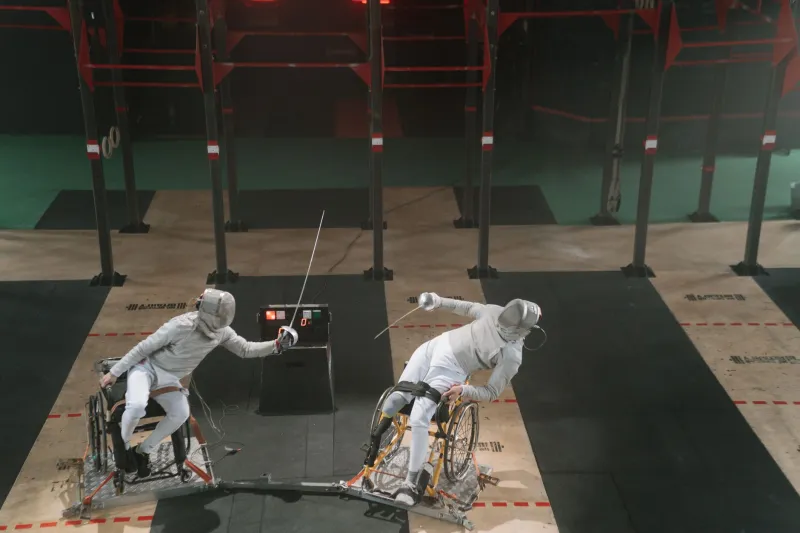
Electronic scoring equipment alone represents a significant line item. High-end scoring machines from manufacturers such as Absolute Fencing Gear or Allstar, when configured for full competitive environments with redundant systems and updated software, can run between $3,000 and $7,000 per unit. European national training centers routinely maintain multiple units across dedicated pistes, with replacement cycles measured in years rather than decades. By contrast, several American university fencing programs — many of which operate under the financial constraints of NCAA club sport designations rather than varsity status — report using equipment that is a decade or more old.
"We have one scoring machine for three pistes," said one East Coast university fencing coach, who asked not to be identified by name given ongoing budget negotiations with their athletic department. "In a European national training center, that ratio would be considered inadequate for a single athlete's warm-up session."
The Blade and Lamé Equation
Beyond scoring infrastructure, the quality of individual equipment — blades, guards, lamés, and body cords — reflects a similar divide. European fencers competing at the championship level are typically outfitted with blades that meet the most current FIE (Fédération Internationale d'Escrime) specifications, manufactured to tolerances that affect both performance and safety. These blades, sourced from established European manufacturers, carry price tags that can reach $150 to $300 per blade for top-tier foil and épée options.
American fencers, particularly those training outside of the handful of well-funded national-level clubs concentrated in cities such as New York, Los Angeles, and Chicago, frequently train with blades that fall into a lower specification tier — functional for domestic competition but potentially disadvantageous when matched against opponents whose equipment has been optimized for international standards.
Lamés present a related challenge. The conductive jackets required for foil and sabre fencing degrade with use, and their replacement represents a recurring cost that many American programs absorb unevenly. A quality FIE-certified lamé can cost between $200 and $400, and programs that cannot fund timely replacements risk training athletes on equipment that produces inconsistent scoring signals — a problem that becomes acutely visible when those athletes compete on European-standard equipment for the first time.
The Coaching Technology Layer
Perhaps the least visible but most consequential investment gap involves the analytical and coaching technology that European programs have integrated into daily training. Video analysis software, motion-capture systems, and biometric monitoring tools have become standard fixtures in several European national fencing centers. These tools allow coaches to identify mechanical inefficiencies, track fatigue patterns, and tailor training loads with a precision that is difficult to replicate through observation alone.
American programs, with some notable exceptions among elite private clubs, have been slower to adopt this layer of technology — not because coaches are unaware of its value, but because the cost of implementation is prohibitive without dedicated funding streams. A comprehensive video analysis setup, including cameras, software licenses, and storage infrastructure, can require an initial investment of $10,000 or more, with ongoing subscription and maintenance costs that strain budgets already stretched thin by facility rental, travel, and basic equipment needs.
"The European programs aren't just buying better gear," observed one American fencing program director with experience competing internationally. "They're buying a better feedback loop. Their athletes know, in real time, what they're doing wrong. That's a compounding advantage."
Practical Paths Forward for American Programs
Acknowledging the gap is the first step; identifying workable strategies to narrow it is the more urgent task. Several approaches have gained traction among American programs seeking to modernize without destabilizing their finances.
Consortium purchasing represents one promising model. When multiple clubs or university programs coordinate bulk equipment orders, they can negotiate pricing that individual buyers cannot access. Regional fencing organizations in the Mid-Atlantic and Great Lakes areas have begun exploring this approach, with early results suggesting meaningful savings on scoring equipment and blade procurement.
Grant funding and corporate sponsorship remain underutilized avenues for many programs. USA Fencing offers development grants for clubs meeting certain criteria, and technology companies with interests in sports analytics have shown willingness to partner with collegiate programs in exchange for visibility and data-sharing arrangements. Programs that have pursued these partnerships report that the application process, while time-consuming, has delivered equipment upgrades that would otherwise have taken years to fund through membership fees and fundraising alone.
Phased equipment replacement cycles allow programs to prioritize the upgrades with the greatest competitive impact first. Most coaches consulted for this article identified scoring machine modernization and lamé replacement as the highest-priority investments, given their direct effect on training fidelity and scoring accuracy. Blade upgrades, while valuable, were generally ranked as a secondary priority for programs with limited capital.
Leveraging used equipment markets within the fencing community also offers a viable bridge strategy. As European clubs cycle out equipment that remains serviceable by American standards, opportunities exist to acquire quality gear at a fraction of its original cost. Building relationships with European federation contacts — a natural byproduct of participation in events such as the 2018 European Championship — can facilitate access to these markets.
The Competitive Calculus
None of these strategies fully closes the gap that the 2018 European Championship has made visible. European programs benefit from funding structures, governmental support frameworks, and decades of infrastructure investment that cannot be replicated overnight by American programs operating in a fundamentally different financial ecosystem.
What American programs can control, however, is how strategically they allocate the resources they do have — and how urgently they pursue the partnerships, grants, and purchasing efficiencies that can accelerate their modernization timelines. The 2018 European Championship has served, among other things, as a detailed inventory of what competitive excellence requires at the international level. For American programs willing to study that inventory carefully, the path forward, while demanding, is navigable.