Priced Out of the Piste: The Hidden Financial Burden Facing American Fencers Who Chase European Glory
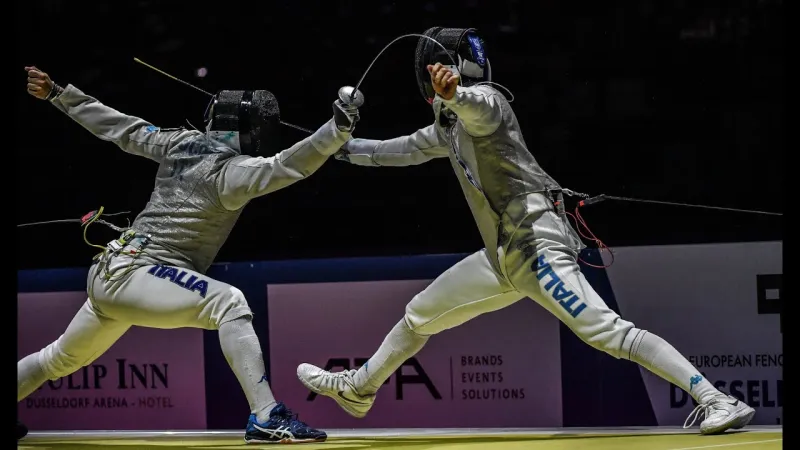
The 2018 European Fencing Championship in Novi Sad, Serbia, delivered moments of breathtaking athletic excellence—sequences of footwork, blade work, and tactical intelligence that left observers reaching for superlatives. For American fencers watching from afar, or those fortunate enough to attend in person, the event crystallized a question that has lingered for years in the sport's domestic community: What does it actually cost to compete at that level, and is the American pathway to European competition financially sustainable for anyone outside a narrow economic bracket?
The answer, drawn from conversations with active competitors, parents managing family budgets, and administrators overseeing collegiate and club programs, is complicated, sobering, and in some cases, quietly devastating.
The Baseline: What European Peers Actually Spend
Before examining what American fencers pay, it is worth establishing a comparative baseline. Many of Europe's top competitors at the 2018 Championship operate within national federation structures that absorb substantial costs. Training facilities, domestic competition circuits, and centralized coaching programs are either subsidized or fully funded through government sports ministries in countries like France, Italy, Hungary, and Russia. An elite Hungarian épée fencer preparing for the European Championship may contribute personally to travel and incidentals, but the structural costs—facility access, high-level coaching, equipment allowances—are largely covered institutionally.
The American model operates on an almost entirely inverted premise. With the exception of limited United States Fencing Association support for nationally ranked athletes, the financial responsibility rests almost entirely on the individual, the family, or the club.
Breaking Down the Numbers
For an American fencer genuinely pursuing international competitiveness at the level displayed in Novi Sad, the annual financial picture looks roughly as follows.
Equipment represents the first significant line item. A competitive setup—weapon, body cord, lamé (for foil and sabre), mask, jacket, underarm protector, and glove—runs between $800 and $1,500 at the entry level, with serious competitors often maintaining multiple sets and replacing components regularly. European-standard equipment from brands that supply the championship circuit can push that figure considerably higher.
Club and coaching fees constitute the largest ongoing expense for most athletes. Private coaching in major metropolitan areas—New York, Los Angeles, San Francisco, Washington D.C.—frequently runs $80 to $150 per hour. Dedicated fencers training five or more hours weekly with a private coach can accumulate $25,000 to $40,000 in coaching costs annually before a single travel expense is counted.
Domestic competition adds further strain. The United States Fencing Association's national circuit requires travel to events held across the country. A family based in the Midwest attending four to six national events per year—flights, hotels, registration fees, and meals—may spend $8,000 to $15,000 on domestic competition alone.
International travel and competition, the component most directly relevant to the European circuit, is where budgets can fracture entirely. A single trip to a European Cup event or World Cup qualifier involves transatlantic airfare ($800 to $1,500 round trip), accommodation ($100 to $200 per night across a week-long stay), registration fees, coaching accompaniment, and daily expenses. A fencer attending three to four such events annually—the minimum considered necessary to build genuine competitive experience at the European level—may spend $15,000 to $25,000 on international travel alone.
Aggregated, a serious American fencer genuinely preparing to compete at the standard demonstrated at the 2018 European Championship is likely investing between $50,000 and $80,000 per year. For families with multiple fencing children, or athletes competing in the sport's more expensive weapons and formats, that figure climbs further.
Voices from the Community
Marcus R., a 22-year-old sabre fencer from the Chicago area who has competed in two European Cup events, described the financial reality plainly. "My parents have been incredible, but we've had honest conversations about what's sustainable. I've watched teammates drop off the international circuit not because they weren't good enough, but because the money ran out. That's a talent drain the sport doesn't talk about openly enough."
His perspective is echoed by program administrators at the club level. One director of a competitive fencing club in the Mid-Atlantic region, speaking on background, noted that her club has lost several nationally ranked juniors to financial attrition in recent years. "We've tried to build scholarship structures, pursue sponsorships, and connect families with grant opportunities. But the gap between what we can offer and what it actually costs to develop a world-class fencer is enormous. The 2018 European Championship results aren't just a performance story—they're a funding story."
Parents, frequently the financial architects of young fencers' careers, describe a slow accumulation of costs that can feel manageable in isolation but overwhelming in aggregate. "You start with club fees, then you're buying better equipment, then you're flying to nationals, and then someone says your kid needs to fence in Europe to really develop," said one parent of a nationally ranked junior foilist from California. "Each step seems logical. But when you add it up at the end of the year, you realize you've spent more on fencing than on anything else in your family's budget."
Structural Solutions and Their Limits
The American fencing community has developed partial responses to this financial pressure. Collegiate programs offer the most significant relief, providing scholarships, equipment, coaching, and competition access at no cost to the athlete. The pipeline from junior international competition to collegiate recruitment is real and increasingly deliberate, with European Championship rosters serving as de facto recruiting catalogs for Division I programs.
However, collegiate eligibility is finite, and the transition from college fencer to post-collegiate international competitor reintroduces all of the financial pressures that collegiate support temporarily resolves. Many athletes who showed genuine promise at the junior and collegiate levels simply exit the international circuit at precisely the age when European competitors—supported by national federation structures—are entering their peak competitive years.
USA Fencing's high-performance support, while meaningful for athletes who achieve national team status, serves a narrow band of already-elite competitors. The developmental layer beneath that tier—athletes talented enough to benefit from European experience but not yet ranked high enough to access federation support—remains almost entirely self-funded.
What the 2018 Championship Reveals
The performances witnessed at the 2018 European Championship in Novi Sad were not produced overnight. They reflect years of structured, well-resourced development within national systems that treat elite fencing as a public investment rather than a private luxury. The athletes who competed there had access to coaching, facilities, competition experience, and institutional support that most American fencers cannot replicate regardless of their talent or commitment.
For the American fencing community, the championship is both a performance benchmark and a structural indictment. The question of whether the United States can close the gap on European elite fencing is, at its core, a question of whether American institutions—federations, universities, private clubs, and government sports agencies—are willing to invest in the infrastructure that makes elite performance possible at scale.
Until that investment materializes in substantive form, the cost of dreaming at Europe's level will continue to be borne by the families of individual athletes—and the sport will continue to lose talented fencers who simply could not afford to stay.