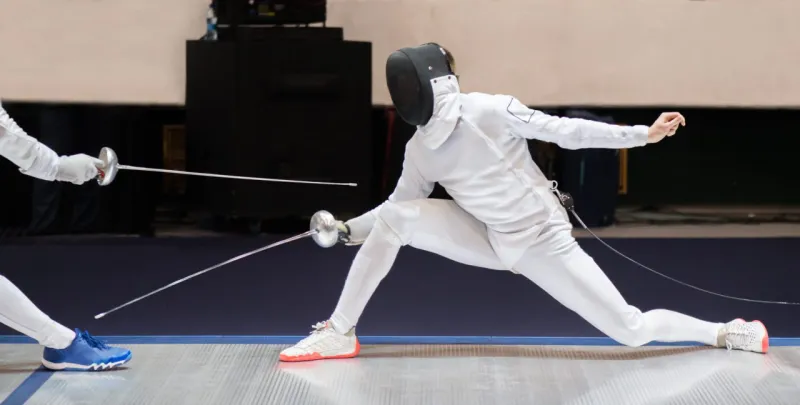
Leaving the Strip Behind: Why American Fencers Are Planting Roots in Europe's Elite Training Ecosystem
For most American athletes, the concept of relocating to a foreign country in pursuit of a sport is the kind of decision reserved for Olympic cycles and headline-generating career moments. For a quietly expanding cohort of American fencers, however, the move to Europe has become something far more deliberate — a calculated, long-term investment in a competitive environment that simply cannot be replicated at home. The 2018 European Fencing Championship, held this year in Novi Sad, Serbia, has brought renewed attention to this phenomenon, illuminating the stories of athletes who have traded American college towns and regional club systems for the intensity of European training culture.
The Pull Factor: What Europe Offers That America Cannot
To understand why American fencers are making this move, it helps to understand what they are moving toward. European fencing infrastructure, particularly in nations such as France, Italy, Hungary, and Russia, operates on a scale and with a depth of institutional support that has no true equivalent in the United States. National federations fund elite training centers. Coaches at the club level often hold credentials and competitive histories that would place them among the top handful of instructors in the entire American system. Daily training partners are frequently ranked athletes in their own right.
For an American fencer arriving in, say, a mid-tier French club, the immediate competitive environment can feel both humbling and galvanizing. Bouts that would have represented a high-water mark back home become routine preparation. The standard is simply higher, and that elevation — uncomfortable as it is — accelerates development in ways that years of domestic competition often cannot.
Several American fencers who have spent time training in Europe ahead of the 2018 season have described the experience in strikingly similar terms: the volume of quality sparring available on any given training day is categorically different from what they had access to in the United States. That density of elite-level contact, accumulated over months and years, compounds into a measurable competitive edge.
Integration and Its Challenges
The decision to relocate is one thing. The process of integration is another matter entirely. American fencers arriving in European clubs must navigate language barriers, unfamiliar coaching methodologies, and cultural expectations around training discipline and hierarchy that do not always align with the more individualistic approach common in American athletic culture.
Coaching relationships in many European systems carry a formality and deference that American athletes, accustomed to a more collaborative dynamic with their coaches, can find jarring at first. Instructions are not typically debated on the training floor. Technical adjustments are expected to be absorbed and applied without extended discussion. For athletes who have grown up in American sports culture — where self-advocacy and open communication with coaches are actively encouraged — this adjustment can be one of the more psychologically demanding aspects of the transition.
Language presents its own set of complications. Fencing instruction, particularly at the tactical level, depends on nuance. An athlete who cannot fully comprehend the reasoning behind a coach's tactical directive is working at a disadvantage regardless of physical talent. Many American fencers who have made successful transitions to European clubs cite language acquisition as a non-negotiable early priority — not merely conversational fluency, but a working command of fencing-specific terminology in the language of their adopted country.
Club culture also varies significantly by nation. Italian clubs tend to emphasize classical technique and historical lineage within specific fencing traditions. Hungarian programs, particularly in sabre, operate with an almost militaristic precision and a fierce collective identity. French épée culture prizes intellectual engagement with tactics as much as physical execution. American fencers must not only meet the technical standards of these environments but demonstrate a willingness to absorb and honor the traditions they are entering.
The 2018 Championship as a Proving Ground
The 2018 European Fencing Championship has served as a meaningful benchmark for American fencers who have undergone this migration. While the championship is formally a European competition — and American athletes are not eligible to compete directly — many have used the event's surrounding circuit, the qualifying competitions that precede it, and the broader World Cup calendar that runs alongside it as a measure of their progress within the European system.
The athletes who have integrated most successfully into European club environments are not necessarily those with the most raw talent. They tend to be individuals who approached the transition with a long-term orientation, accepting early setbacks as data rather than verdicts. Those who arrived expecting immediate results, or who maintained a psychological distance from their adopted training environments, have generally found the experience less transformative.
What the 2018 season has made clear is that American fencers who commit fully to the European training model — not as visitors passing through, but as genuine participants in a competitive ecosystem — are capable of narrowing the gap with European elite athletes at a meaningful rate.
What This Reveals About American Fencing Infrastructure
The migration of talented American fencers to European clubs is not simply a story about individual ambition. It is, in aggregate, an indictment of the structural gaps that persist in American fencing development. The absence of a robust, federally supported elite training infrastructure in the United States means that the most committed American fencers must either accept a developmental ceiling or seek the conditions they need elsewhere.
Collegiate fencing programs, while valuable, are not designed to produce Olympic-caliber athletes. They serve a different function — introducing the sport to a broad population and providing competitive experience within an academic framework. The athletes who emerge from that system and aspire to compete at the highest international levels frequently find that the next developmental step simply does not exist within the American fencing ecosystem in any reliable form.
Until that changes — until the United States invests in the kind of centralized, professionally staffed, full-time training infrastructure that European nations have built over generations — the fencing diaspora will continue. Talented American athletes will keep making the difficult, expensive, and often lonely choice to build a second home on a foreign strip because it remains the most reliable path to competing at the level the sport demands.
The 2018 European Championship has not created this dynamic. It has simply made it more visible, and perhaps more urgent, than ever before.